















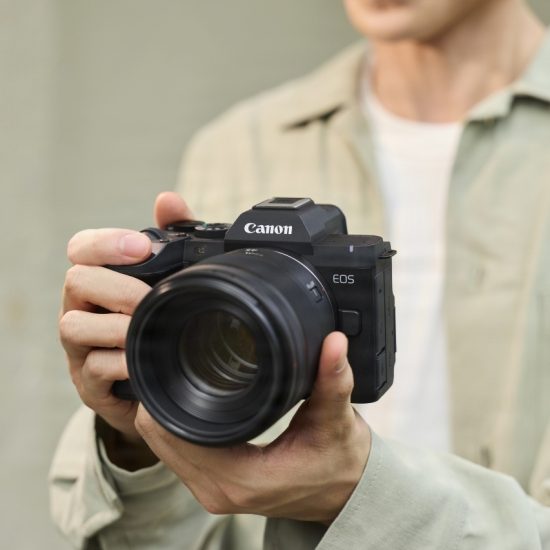
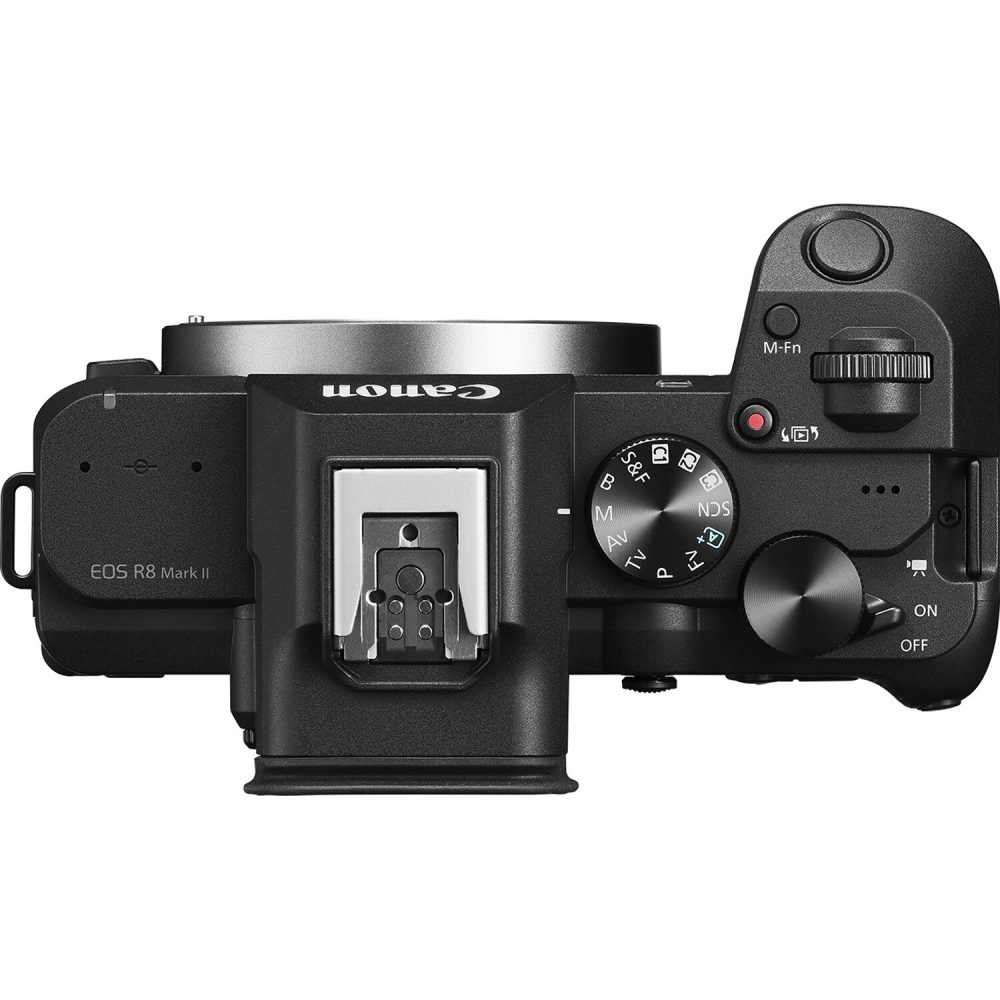
Canon has officially announced the EOS R8 Mark II, a direct successor to its entry-level full-frame mirrorless camera that balances a tiny footprint with pro-level capabilities. Positioned just above the original R8, which stays in the lineup—the Mark II delivers the features creators asked for most: internal stabilization, faster handling, and smarter autofocus.
A New Look, Built on an Old Idea
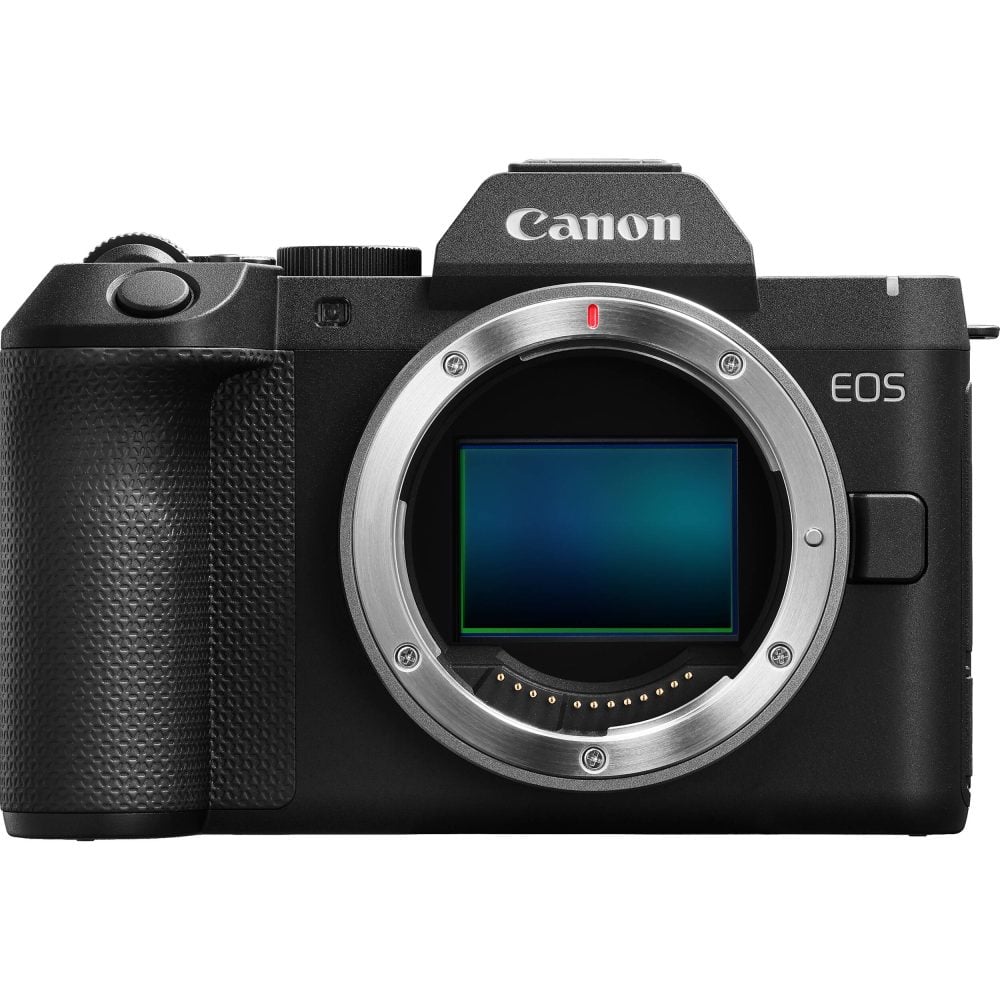
The most obvious change is the body itself. Where the first R8 had soft, rounded edges, the Mark II is sharper and more angular. Canon says the shape borrows from its film cameras of the 1980s, and reviewers have noted the resemblance to early Sony full-frame bodies too—just with nicer materials. The grip now uses the same textured rubber found on Canon’s flagship R3 and R1 cameras, giving it a more premium feel in the hand despite a mostly plastic construction.
Even with the redesign, the R8 Mark II keeps its identity as Canon’s lightest and smallest full-frame camera with built-in image stabilization. It weighs about 546 grams and measures roughly 131 by 90 by 80 millimeters, so it still slips easily into a smaller bag.
Physical handling gets two overdue upgrades:
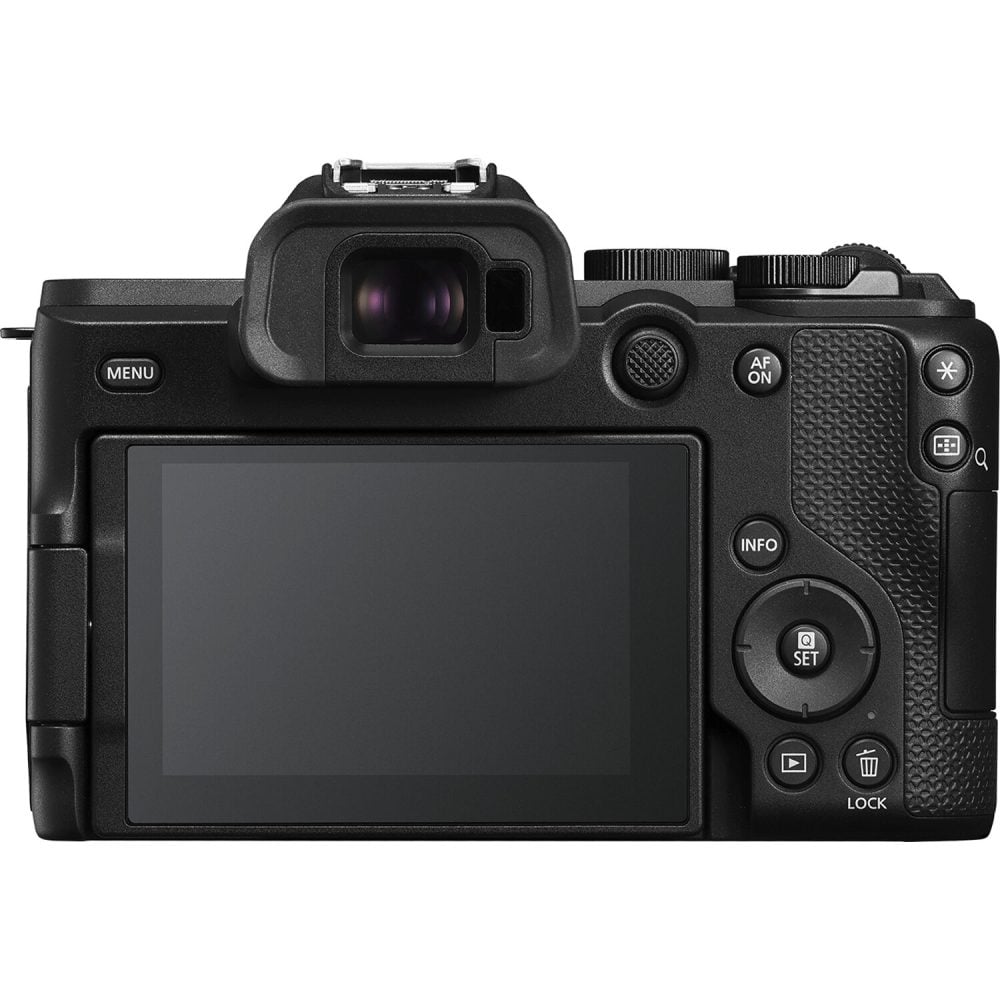
Rear Multi-Controller Joystick: Shooters no longer need to drag a thumb across the rear touchscreen to position focus points while looking through the electronic viewfinder.
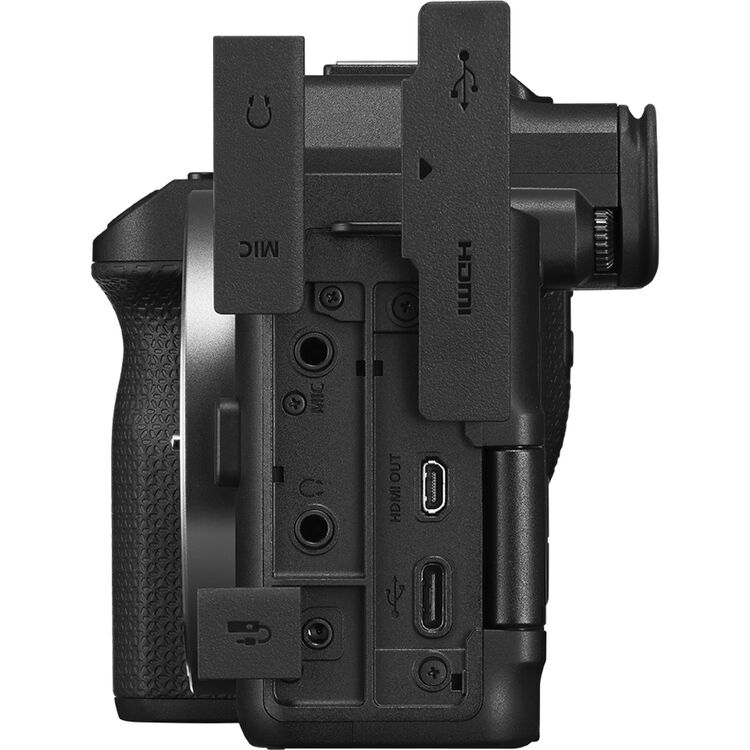
Relocated SD Card Slot: The single UHS-II card slot has moved out of the bottom battery compartment and onto the side of the grip, making memory card swaps simple when working on a tripod.
The camera retains a 2.36-million-dot OLED electronic viewfinder (0.7x magnification) and a fully articulating touchscreen. For creators with larger hands, Canon offers an optional EG-E2 extension grip ($90) that provides extra pinky clearance without blocking battery access. The only notable ergonomic quirk is the power switch, which now shares duty as a three-way toggle (Off/Stills/Video), making it easy to accidentally flip straight into video mode when powering up quickly.


Same Sensor, Smarter Processing
Inside, the R8 Mark II uses the same 24.2-megapixel full-frame sensor found in the original R8 and the R6 Mark II. Canon isn’t fixing what wasn’t broken here—the sensor is known for strong image quality in low light and accurate skin tones. What has changed is everything working behind it.
The camera now includes in-body image stabilization, correcting for up to 7.5 stops of camera shake at the center of the frame and 7 stops toward the edges when paired with a stabilized RF lens. That’s a meaningful addition for handheld shooting in dim conditions.
Autofocus has also been retuned. The tracking system recognizes people, animals, and vehicles, and a new Register People Priority mode lets users “train” the camera to recognize a specific person’s face and keep focus on them even in a crowd. Burst shooting still tops out at 40 frames per second using the electronic shutter, unchanged from the original R8, but the buffer has grown substantially—about 30 percent more shots in RAW and nearly 60 percent more in JPEG, meaning the camera can now shoot at full speed for noticeably longer before slowing down.
Built for Creators, Not Just Photographers
Video shooters get plenty to work with too. The R8 Mark II records oversampled 4K video at up to 60 frames per second, pulled from a 6K capture, along with 10-bit color and Canon Log 3 for those who want more flexibility when editing. A new feature lets users press a single button to rack focus automatically, pulling the subject out of focus at a chosen speed—a simple trick that’s normally difficult to do by hand.
![]()
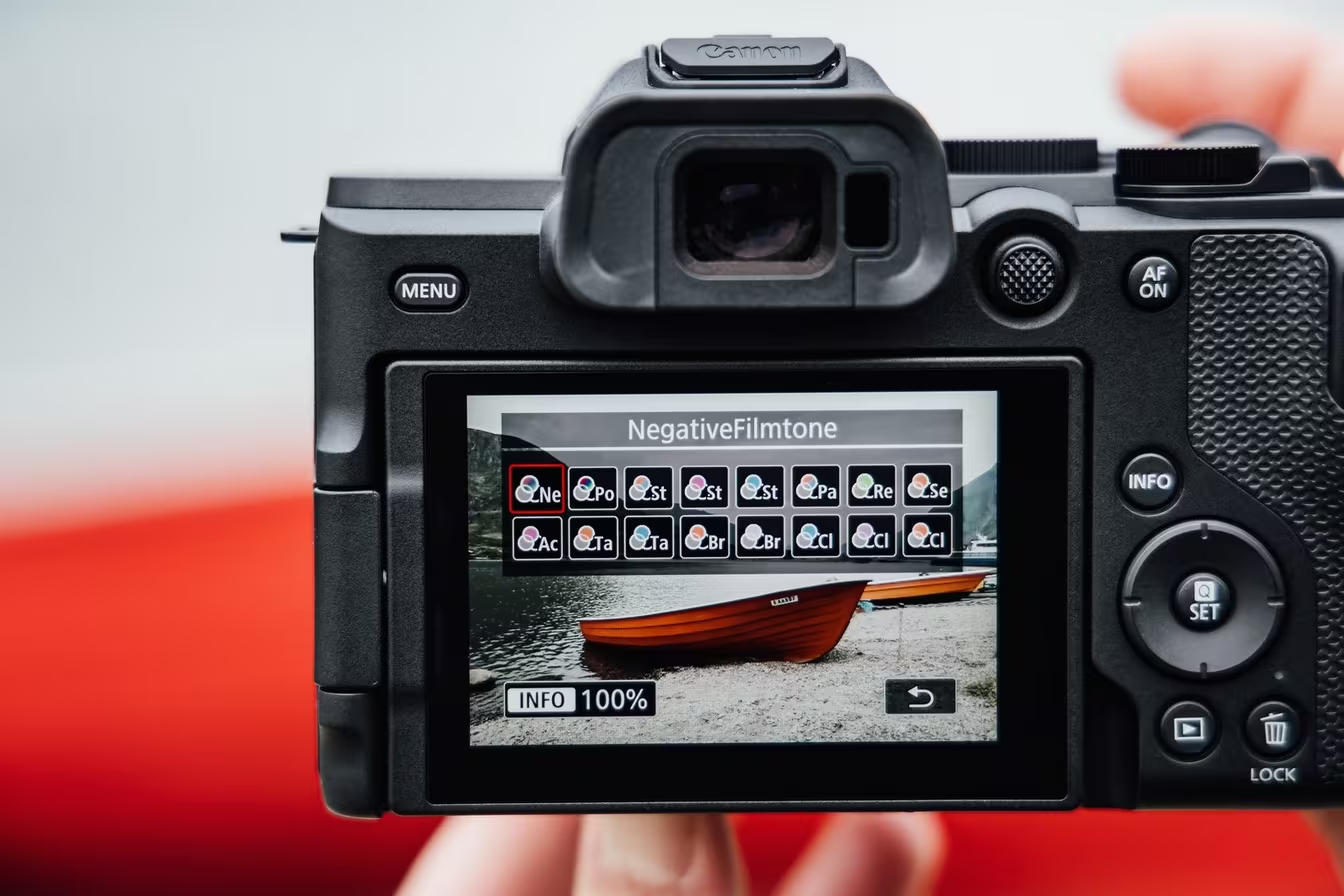
Canon has also leaned into approachable creative tools. Sixteen color filters are built in, including two new “FilmTone” presets that mimic the look of classic analog film straight out of the camera. A beginner-friendly Creative Auto mode walks new users through adjusting background blur and other settings without needing to understand aperture or shutter speed first.

The Lingering Compromise
The R8 Mark II’s biggest limitation remains its power source. Canon kept the compact LP-E17 battery, which is CIPA-rated for approximately 270 shots per charge using the LCD and just 150 shots using the EVF (stretching to 340 and 220 shots in power-saving mode). With the addition of in-body stabilization running off the same small pack, carrying spare batteries or relying on USB-C power delivery will be essential for full-day shoots.
Key Specifications
| Feature | Canon EOS R8 Mark II |
| Sensor | 24.2MP Full-Frame CMOS |
| Stabilization | 5-Axis In-Body IS (up to 7.5 stops coordinated) |
| Continuous Drive | 40 fps electronic (with 0.5s pre-capture) / 6 fps mechanical |
| Video Resolution | 6K-oversampled 4K up to 60p (uncropped), 1080p up to 180p |
| Color Profiles | Canon Log 3 (14 stops DR), HDR PQ, HLG, FilmTone filters |
| Viewfinder | 2.36M-dot OLED EVF, 0.70x magnification |
| Storage | 1x UHS-II SD (side door) |
| Weight & Dimensions | ~546g (with battery and card); 131.4 x 90.0 x 79.7 mm |
| Battery | LP-E17 (~150 EVF / ~270 LCD shots CIPA) |