

















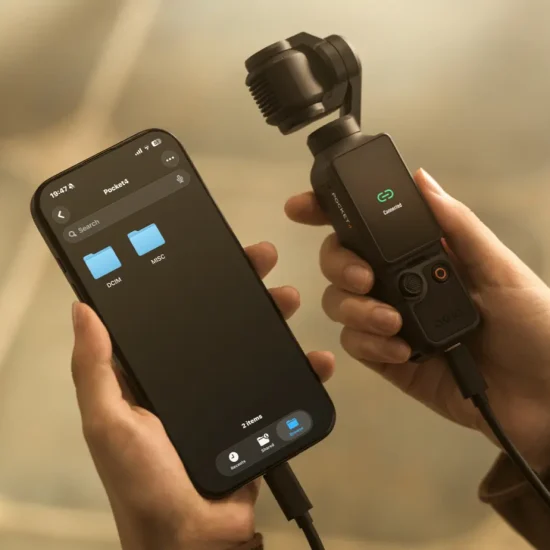
DJI’s Osmo Pocket 3 was already one of the best small cameras you could buy. Now, two years later, the Osmo Pocket 4 is here — and it builds on everything that made the Pocket 3 great while fixing some of its real frustrations.
The biggest upgrade is under the hood. The Pocket 4 uses a new 1-inch CMOS sensor with an f/2.0 aperture, the same lens as before, but with a significantly improved sensor. DJI claims two extra stops of low-light performance, bringing the total to 14 stops of dynamic range. In real-world use, this holds up. Night shots that looked dark or muddy on the Pocket 3 come out with far more detail and better exposure on the Pocket 4. Colours also look more natural. Side by side with the Pocket 3, footage from the new camera looks richer without oversaturation.
The Pocket 4 can now shoot at 4K/240fps — double the 120fps limit of the Pocket 3. That means smoother, sharper slow-motion video for everything from sports to everyday moments. For those who want more control over their footage, the Pocket 4 records in full 10-bit D-Log — a step up from the lighter D-Log M on the Pocket 3. This gives you greater flexibility when colour grading in post. Combined with the f/2.0 aperture and natural bokeh, cinematic-looking shots are more achievable than ever on a camera this small.
Lossless Zoom — and It Actually Works
The Pocket 4 offers 2x lossless zoom in 4K and 4x in 1080p. While there was early scepticism about whether the zoom was truly lossless, the 2x option holds up well in practice — detail stays sharp with no noticeable quality loss. The 4x zoom in 4K does show some digital artifacts, so it’s best used carefully.
Two New Buttons That Make a Real Difference
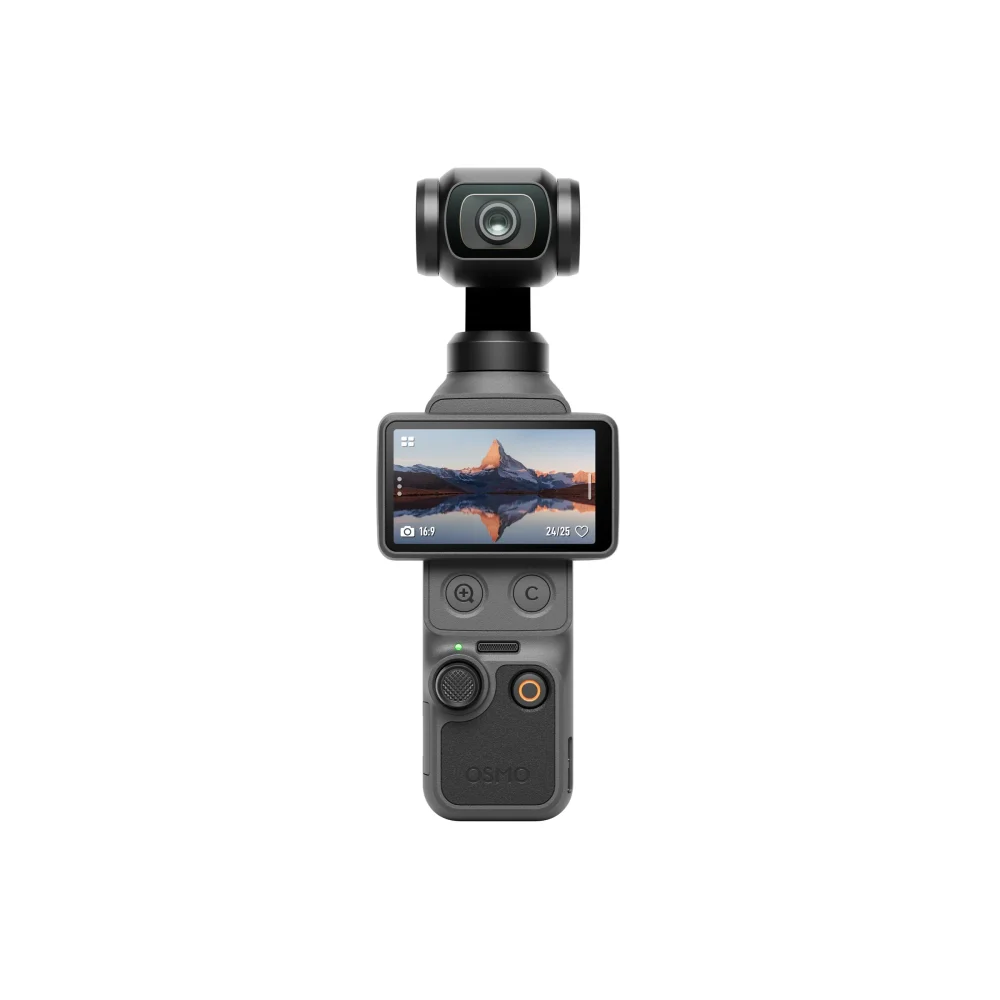
This is one of the most practical upgrades. Below the 2-inch OLED screen, DJI added two new physical buttons. A dedicated Zoom button and a customizable button you can assign up to three functions via single, double, and triple clicks.
The zoom button gives you an instant punch-in rather than a slow, joystick-controlled zoom. A Welcome fix for anyone who has fumbled a shot trying to zoom smoothly. The custom button is equally useful. You can assign actions like recentering the gimbal, switching recording presets, or locking the gimbal — all without diving into menus. It even works while recording.
Film Tones: A Shortcut to Style
New to the Pocket 4 are six on-camera Film Tones — similar to Fujifilm’s film simulations. They let you apply a colour mood to your footage without colour grading afterwards. Of the six available at launch, Warm and Movie are the most practical for everyday use. The others can feel a bit extreme, though you can dial down the intensity. It’s not yet clear if more tones will be added in future updates.
Audio: Spatial and Zoom
The Pocket 4 introduces spatial audio using its three built-in microphones, giving sound a sense of direction — useful for live music or environmental recording. However, it’s not ideal as a default setting, as voices can sound distant and unclear when spatial audio is active.
Audio Zoom, which boosts the sound of whatever you zoom into, is a nice idea but limited in practice. It amplifies what the microphone is already picking up rather than improving it. It could help in quick interview situations, but it’s not a replacement for an external microphone.
The camera also supports 4-channel audio recording when connected to DJI Mic transmitters, capturing both vocals and ambient sound simultaneously.
Battery, Storage, and Extras
The Pocket 4 has a 1,545mAh battery — about 20% larger than the Pocket 3 — giving you roughly two and a half to three hours of shooting time at 4K. It charges to 80% in just 18 minutes.
Built-in storage is 107GB, so you can shoot and transfer without a memory card. Transfer speeds reach up to 800MB/s.
There’s also a modular fill light included in the Creator Combo, with adjustable colour temperature and brightness — useful for low-light selfies or backlit shots.
What It Still Doesn’t Have
A few things remain unchanged — and worth noting. There’s no optical zoom, only digital. Portrait mode is still capped at 3K resolution — you need to rotate the camera to get full 4K. And there’s no dust or water protection, which is a real-world limitation given the exposed gimbal.
The DJI Osmo Pocket 4 is the best small camera you can buy right now. The new sensor, improved low-light performance, proper D-Log, faster slow motion, and the two new physical buttons make it a meaningful upgrade over the Pocket 3.